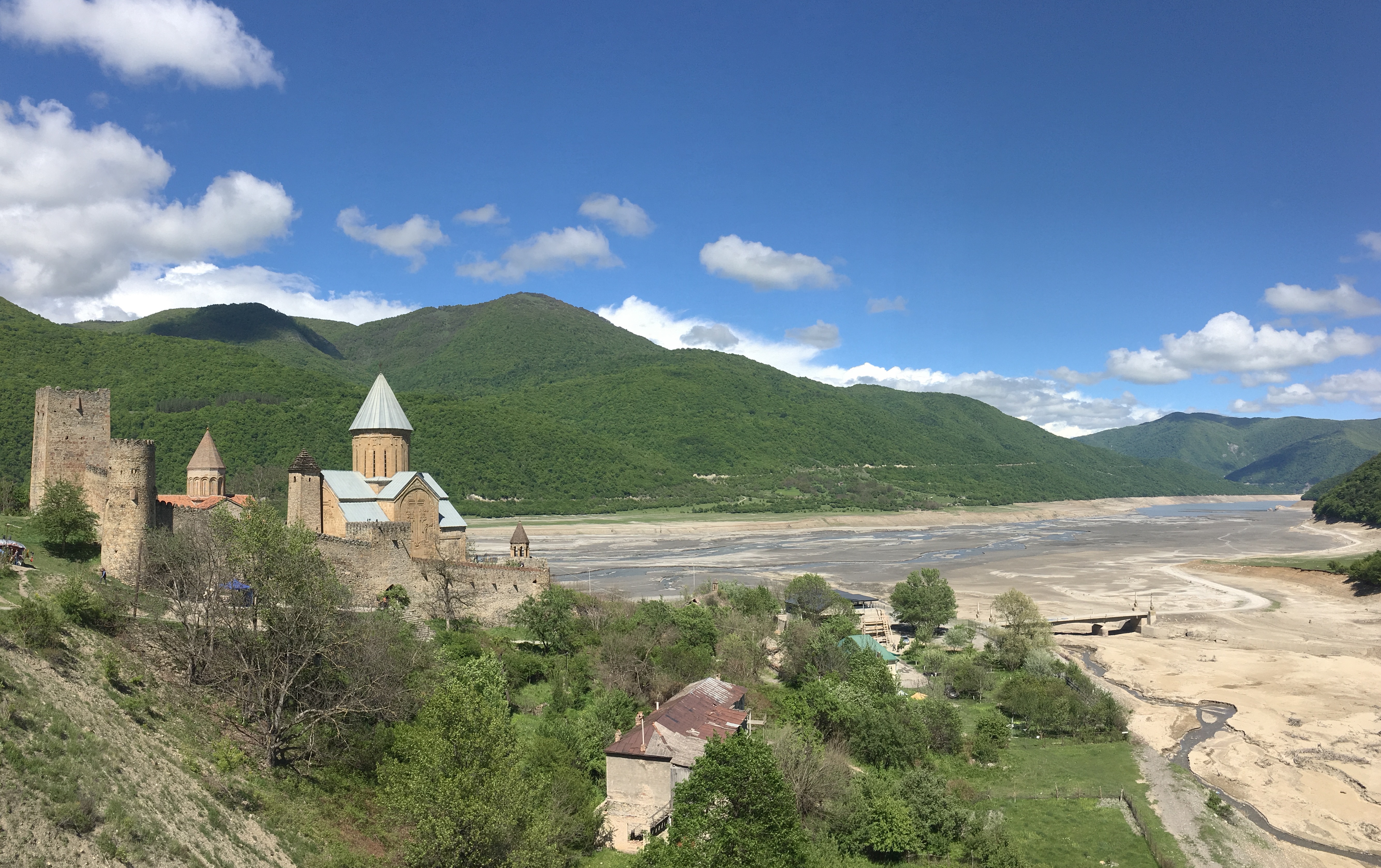
Georgia is an absolute gem – a must-see.
I may as well save myself the effort of writing and leave it at that. The above sentiment aptly summarizes my early and lasting impression of Georgia, an enchanting country located in the Transcaucasian region of Eurasia.
Officially called Sakartvelo, Georgia lies at the crossroads of Western Asia and Eastern Europe on a fertile, largely mountainous land bridge bordering the Black Sea, between Turkey and Russia, with Armenia and Azerbaijan located to the country’s south and southeast. In 1921 the country was attacked and occupied by the Russian Soviet Red Army, the Bolshevik land force, and a puppet regime loyal to Moscow was promptly installed. Georgia regained its independence in 1991 after the fall of the Soviet Union and, in 2003, the so-called “Rose Revolution” sparked widespread protests over disputed parliamentary elections, which ultimately led to a pro-Western peaceful transfer of power. Based on my many conversations with locals, Georgians very much view themselves as part of Europe both from a geopolitical standpoint and, to some degree, culturally as well. Indeed, the country’s impressively deep history and early affinity for ancient Greek philosophy pulls it closer to the West than the East.
During my halcyon days in Kyrgyzstan, my mate John connected me with with his Georgian friend, Gigisha, who lives in Tbilisi, the country’s capital city. Gigisha is an up-and-coming film director who recently finished shooting a film titled “Neighbours”, which profiles the diverse lives of residents in traditional Georgian apartment buildings with Italian-style courtyards where inhabitants maintain intimate bonds and secrets are hard to keep (click here to read more about the mysterious courtyards of Tbilisi). I promised him I would reciprocate and show him around Toronto if (hopefully when) the film is screened at the Toronto International Film Festival.

A typical residential courtyard in Tbilisi, Georgia.
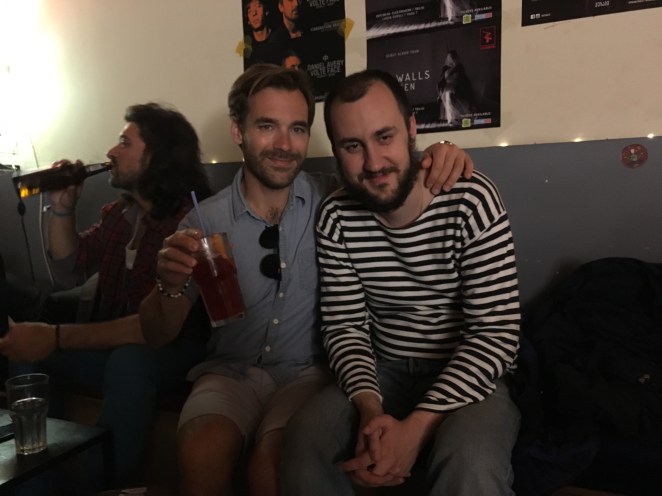
Within two hours of landing in Tbilisi I met with Gigisha and his friend Luka at Fabrika Hostel, where I booked myself a bed in a dorm room. Fabrika is a hip, designer hostel that is head and shoulders above any other hostel I have stayed in. Set in an old sewing factory where Soviet fashion was created, Fabrika is also the epicentre of the city’s art-driven, liberal community where local artists, musicians and (dare I say) hipsters mill around the many artsy shops, bars and restaurants located in Fabrika’s large, inner courtyard. The place would fit in effortlessly into Toronto’s famed Queen Street West neighbourhood or New York’s East Village. I spent many a blurry nights in those haunts, sipping the country’s amazing wines whilst people watching. Background aside, after meeting over a beer or two Gigisha, Luka and I joined up with their girlfriends and we charted a path to the Old Town to eat, drink, laugh and share stories.


My second day in Tbilisi started brilliantly after filling myself with Fabrika’s scrumptious breakfast before I set out on a long walk of the charming streets of Tbilisi, which are embellished with stunning architecture reminiscent of the most celebrated European cities. On the walk up to 4th-century Narikala fortress I struck a conversation with a fellow tourist whilst we were both taking photos of the skyline. Louise, based in London, UK, was in Tbilisi for work and, after a brief introductory chat, we walked the trail up to the hilltop fortress where the city’s sprawl revealed itself to us. Later that afternoon, Louise and I sat down for cappuccino at one of Tbilisi’s many eccentric cafes, where we got to know each other better. As it turns out, we had quite a bit in common and I very much enjoyed meeting such a well-travelled, cosmopolitan person. We spent the next few evenings together experiencing all that Tbilisi has to offer, including the opening of the Sou Festival, a two-month long celebration of art, music and culture. The opening night was at Circus, a Soviet-era neoclassical rotunda building, and featured a string quartet with electro mixes and trippy light projections.


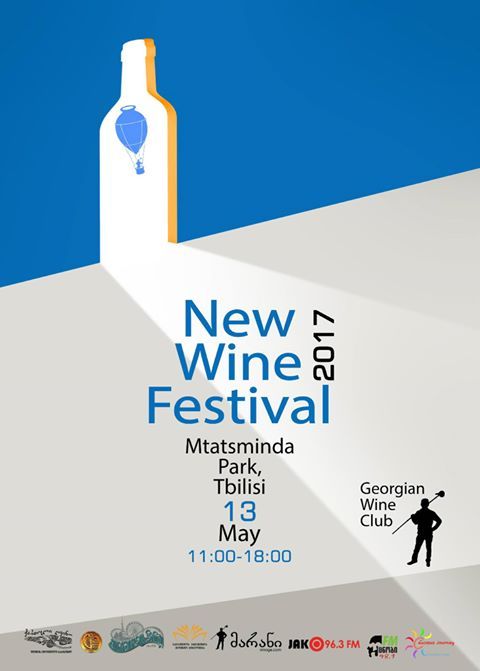
Let us rewind back to Day Two for a moment. Seeing as we got along famously, after sipping our cappuccinos I asked Louise to join me at the New Wine Festival, an annual springtime event featuring Georgian family-owned, medium and large wineries showcasing their wines of the 2016 harvest. Set at Mtatsminda Park, a landscaped area located at the top of iconic Mount Mtatsminda, Louise and I decided to walk up the mount rather than opt for the funicular. The “walk” turned into a 45-minute uphill hike that led us to a closed-off area under construction where Louise had to crawl under a temporary plywood wall to get in to the park grounds. Rather than crawling under, I opted to amble atop a chest-high ledge beside a precipitous drop with electrical wires blocking the way. At the time my route seemed simpler than crawling, but clearly she made the smarter decision. Following our break-in, we joined up with Gigisha and his friends, sampled a few of the country’s tremendous wines – including the qvevri style wine (more on that in the next paragraph) – and we were interviewed by a local TV station about our tourist experience at the wine fest. Not a bad day!


Later that week, whilst sampling more Georgian wine at a wine gallery near Fabrika, I asked the shopkeep to recommend a driver that could take me around Kakheti, the country’s premier wine-producing region. Georgia has an impressive 8,000-year history as one of the oldest wine regions in the world. In fact, the deep traditions of its viticulture are intertwined with the country’s national identity and self-expression. Interestingly, the millennia-old practice of vinifying in large clay qvevri vessels still persists today. This artisanal wine-making method was once suppressed under Soviet rule because it was considered primitive, but it has been revived since 1991 and is widely considered as the country’s crowning achievement. I can attest to its quality; qvevri wine is world-class despite its rather elementary vinification process. Click here to learn more about the traditional qvevri method – it is fascinating.
During my time in the Kakheti wine region, my driver, Paata, and I stopped in at a few wineries to sample the goods (do not worry, only one of us was drinking). Of the handful of wineries we visited, Chateau Mere, featured below, stood out despite being a relatively large-scale operation opened in 2011. Notwithstanding their short history, they make a phenomenal Kisi wine using the qvevri method that reminded me of a greasy Sonoma Valley Chardonnay, but with slightly more minerality due to the qvevri magic.


Another tradition in Georgia is driving with reckless abandon on both highways and city streets. That day Paata stayed true to that custom as we toured around Kakheti visiting old monasteries and castles dotting the landscape in and around Telavi and Sighnaghi, a picturesque hilltop village offering memorable, sweeping panoramic views. Also, in Telavi we visited a 46-metre high 900-year old tree with a massive diameter. I thought it was pretty cool to see such an old tree that stood witness to so many historic events in the region. Below are a few photos to bring this all to life.


Two sights come to mind as worth remembering during that day’s road trip: Ujarma Fortress and Gremi Church. First, Ujarma Fortress is one of the important fortress-towns in Georgia. Established in the 3rd-century AD, it became a multi ethnic centre due to its strategic location on the eastern flank and was the residence of many kings and princes over the centuries. In the early Middle Ages, Ujarma Fortress served as a bastion against Persian and Arab invasions, where many bloody battles were fought for God and King.


Second was the Church of the Archangels sitting on the citadel in Gremi, the capital of the old Kingdom of Kakheti. A 16th-century architectural monument, the Church is very well-preserved and still serves as a place of worship. Adjacent to the church remains a three-story castle, a bell tower and a centuries-old wine cellar. The historical site offers a glimpse into a fascinating past as a trading post along the Silk Road, and as the site of epic resistance against marauding Persian armies. The invading armies unfortunately defaced the frescoes in the church, chipping away at the faces of Christian saints (see below).


Later in the week I decided to treat myself to a two-day sojourn in Stepantsminda, which is located in the Kazbegi region in Georgia’s northern reaches at the border with Russia. Nestled at the foot of the Greater Caucasus mountains, the small municipality is best known as the home of 14th-century Gergety Trinity Church, a stunning hilltop monastery sitting at an elevation of 2,170 metres under Mount Kazbegi. Usually the site offers awe-inspiring views of the surrounding mountain ranges, however that day offered a solemn, cloudy spectacle. Yet the gloomy weather made the experience more introspective and brooding. The hike to church was more demanding than I anticipated, but once I reached the top the views that were revealed to me will forever be tattooed in my memory. The sheer beauty of it struck me deeply and made me feel quite emotional. I am not devout, so the site did not hold any particular religious significance. But, having said that, I was very moved by this inward-looking, spiritual experience.


My overnight stay in Kazbegi was all the more special because I decided to splurge on a lavish accommodation at the Rooms Hotel, a stunning boutique hotel located at the base of the Kazbek Mountain located in the valley opposite the Gergeti Trinity Church. It was pure, unadulterated luxury, but sometimes you just have to treated yourself – right? Surprisingly I did not take many photos of the hotel, but below are a few snaps (minus the amazing ground floor lobby and bar).


I will cap off this blog post by stating the obvious: Georgian food is delightful. I see no need to describe it in detail; instead, I highly recommend you to come here to experience it for yourself. Below are only a few of the delectable dishes that I sampled.


Georgia is one of the most beautiful countries on Earth. From its green valleys strewn with vineyards to its ancient castles and monasteries set in dazzling mountain scenery. Do yourself a favour and come visit. I only saw a small part of the country (I did not have enough time to visit the Black Sea coast), but the overall travel experience was truly unforgettable.
Up next: flying to Delhi, India to link up with a good friend from Canada, Iain Marlow, who has been living and working in Delhi for nearly two years. Previously a journalist for the Globe and Mail’s Report on Business, Iain finally scored himself a foreign correspondent gig with Bloomberg. Click here to read his stories; they are pretty great!
 Into the Breach