I did not leave my comfortable surroundings in Toronto to Eat, Pray, Love like Elizabeth Gilbert. Yet, ironically, I did all of those things to varying degree during my first two months abroad.
I can relate to the protagonist from the bestselling book (admittedly I have never read it, nor have I seen the film). Much like Liz, I was motivated to rebound from failure in my personal life by embarking on a journey through which I would learn from others and, in the process, contemplate the road ahead. Centuries ago Plato said, “An unexamined life is not worth living.” The old Greek philosopher was being a bit hyperbolic, but the essence of his reflection holds true. We are not prisoners of the lives we lead, nor are we condemned to the circumstance of the here and now and this. That’s why I left.
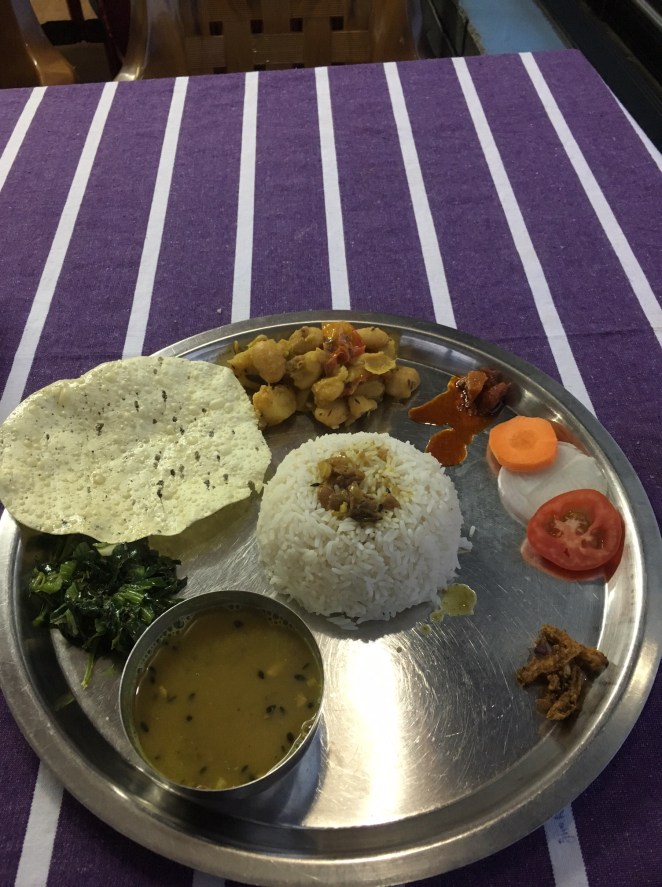
India was on my travel radar because I wanted to learn more about the country’s deep history and coexisting cultures. First and foremost, I came to visit my friend Iain, a talented journalist who last year relocated to New Delhi with his wife, Nicole, and their social and gentlemanly cat, Alvy. The country was also a huge draw because I adore Indian cuisine. While we are on the topic of food, below are photos of only a few of the traditional Indian and Kashmiri dishes that changed my life forever (move over Plato, it is my turn to be hyperbolic). With all that is on offer in India’s kitchens, it is impossible to be bored in this country.


Even the train food was delicious:


Two and a half weeks in India have filled me with refreshed energy. India is a wonderful place to recharge and take your mind off things, mainly because there are so many distractions. Indeed, the country is a veritable tsunami of stimuli. Your senses are invigorated from the moment the balmy air hits your face as you exit the airport and head deeper into one of the country’s sprawling metropolises. In Delhi, I was surrounded by hawkers, wallahs, stray dogs, double-riding cyclists, cars honking incessantly, motorized rickshaws and roadside tea stalls (known as tapris) brewing garam-garam chai. The distinct smells of India also revealed themselves to me one by one, from sandalwood at religious shrines and freshly fried pokaras at a nearby street stand, to garbage and human waste in the narrow, chaotic streets Old Delhi. The sights, sounds and smells of India wake you like a cold shower during a hangover.


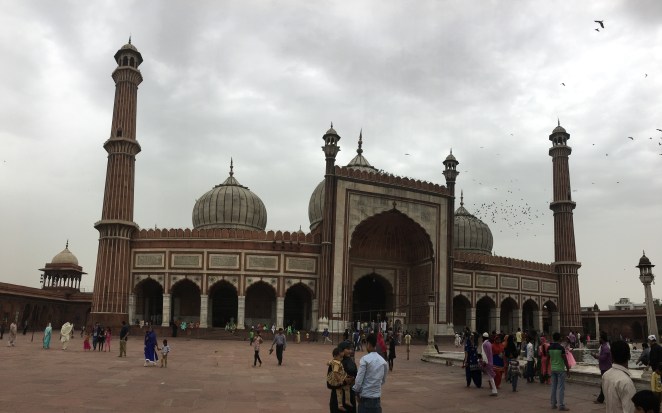
With a good handle on his new city, Iain was an excellent host and suggested sights and attractions to visit in new and old Delhi. During the days, whilst he was busy at Bloomberg reporting on India’s top political news, I would roam the city visiting ancient Mughal mausoleums and Muslim mosques, strolling lush city parks, eating greedily at all-you-can-eat Indian buffets, winding the alleys of Old Delhi, and shopping at Dilli Haat, an open-air craft bazaar, as well as other markets. A few standout attractions in Delhi include Humayun’s Tomb (a 450-year-old mausoleum from the Mughal era), Lodi Gardens (a 90-acre city park containing 15th-century architectural treasures from the Lodi Dysnasty), Jama Masjid (one of the largest mosques in India built by the famous Mughal emperor, Shah Jahan, who also built the Taj Mahal), Qtub Minar (a 73-metre brick minaret completed in 1220), and the attractions the list goes on!
Humayun’s Tomb


Lodi Gardens


Jama Masjid
Qtub Minar Complex


Delhi is not exactly a walkable city, so Iain’s driver, Narayan, drove me around from place to place. You could walk – in fact, I prefer to discover a new city on foot – but Delhi sprawls over such a vast area and the intense pre-monsoon heat, which hovered around 40-45 degrees Celcius, would quickly transform you into a sweaty mess in under 30 minutes. To boot, Delhi also has the poorest air quality of any major city in the world, which only confirmed my decision to opt for Narayan’s services. During our commutes, Narayan and I often chatted about regional politics, including India’s relations with its regional foe, Pakistan. It was clear that he did not view Pakistan favourably, calling his neighbour a “dead state”. Other times we bantered about lighter topics such as what makes a good tikka, his family, and anything related to cricket. Like every other local that I met during my travels, he was surprised that I was unmarried at 34. But, then again, he pointed out that his beloved Prime Minister, Narendra Modi, is also a bachelor. So, that made it okay.
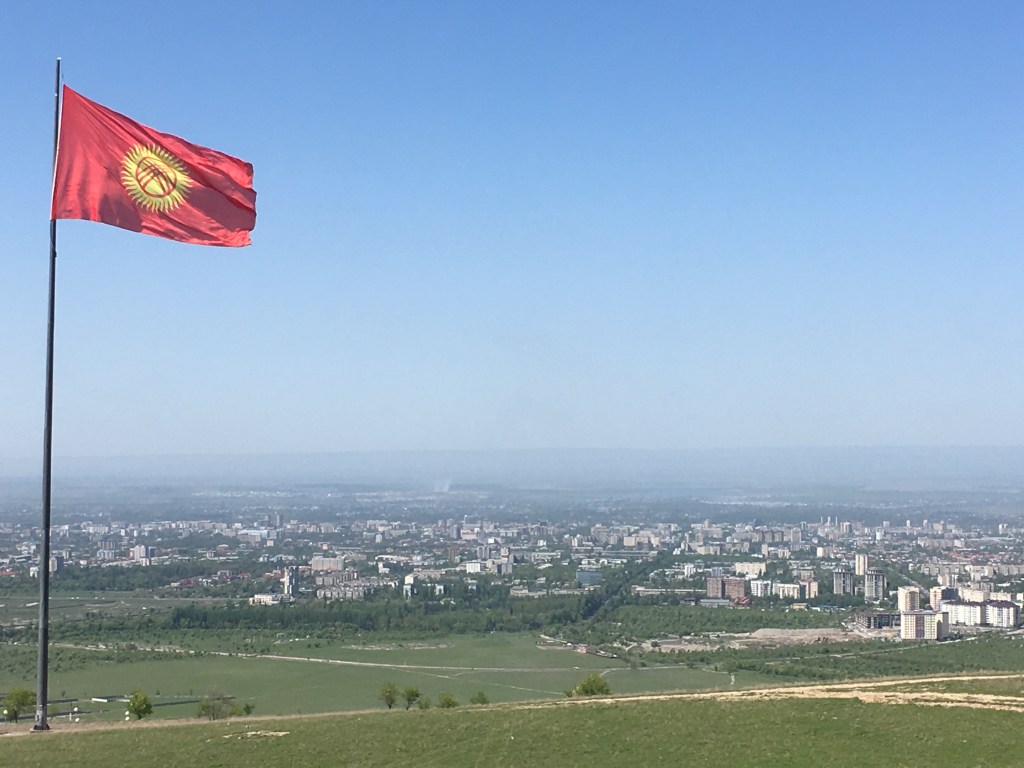
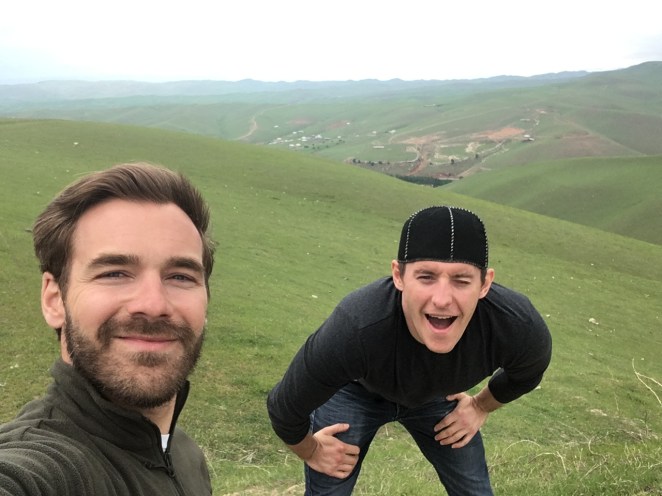
During the evening, after sightseeing the pulsating metropolis, Iain and I would once again join forces to banter about everything and anything over food and libations. Much like my time in Kyrgyzstan, where I visited a dear friend last month, there is an almost romantic feeling that comes with visiting an old friend in a far off, exotic place. It is as if time never stopped and spatial distance means nothing. Like a cassette tape that has not been played for years, the music starts right where it left off. I am proud of what Iain has achieved and it was great to get a glimpse of his life in India.
On Day 5 I booked an overnight stay in Agra, an ancient city on the banks of the Yamuna River that was once the capital of the Mughal empire. Agra is not that great of a city, but it is home to several UNESCO World Heritage Sites, including the world famous Taj Mahal, which is just as majestic as you would image it to be. The Taj is a jewel of Muslim art in India and a masterpiece of world heritage. Indeed, it has earned its place amongst the New 7 Wonders of the World. I was told that the Taj is best observed at morning light; that said, I walked to the entrance gate at 6 a.m. to take in the spectacular sight. With its great dome, towering minarets, reflective tiles adorned with precious stones, exquisite marble jali lattice and Persian calligraphy on its wall, the Taj Mahal is by far the most beautiful building that I have ever seen and a true testament to mankind’s mastery of architecture, masonry and art. The famous Bengali poet Rabindranath Tagore, the pride of India, aptly described it as “a teardrop on the cheek of eternity.” You nailed it, Rabi.


In Agra I also visited the lesser known ‘Baby Taj’, officially the Tomb of I’timad-ud-Daulah. While not as grand as the Taj Mahal, it is just as impressive and, dare I say, displayed more intricate tile work. Also called the “jewel box”, the elegant Baby Taj was a draft for the Taj Mahal as Shah Jahan, the Mughal emperor, perfected his technique before building his architectural opus.


Later that afternoon I visited the Agra Fort, the main residence of the Mughal Dynasty until the mid-1600’s. The walled city is another UNESCO World Heritage Site and is significant in terms of architectural history. While strolling the fort grounds I must have been asked to take over a dozen selfies with local teens, both girls and boys. I suspect most westerners are subjected to same pestering. Strangely those photos are out there, in cyberspace, featured on the Facebook walls and Instagram accounts of Indian teens and pre-teens pretending to know me. Weird. (Note: this happened all over India.)


Later that week Iain and I jetted off to Goa to enjoy sun, sand, surf and seafood in one of South Asia’s most beautiful coastal areas. We opted to stay in South Goa for a more laid-back beach shack vibe as opposed to the more developed northern coastline. We began our long weekend with a one-night stay in Panaji, the Goan capital, at the WelcomHeritage Panjim Inn, a historic hotel in Asia’s only Latin Quarter. The hotel is a time machine to a bygone era of stately residences during the Portuguese conquest of Goa. After a morning stroll and a delightful fish and seafood thali at the jam-packed Ritz Classic, we charted a path to South Goa where we stayed in a comfortable beachfront villa at Galgibaga Beach, a beautiful stretch of golden sand on the shores of the Arabian Sea that is best known as a natural, protected breeding ground for sea turtles. Seeing as it was low season, Iain and I literally had the beach to ourselves apart from a handful of locals sleeping in shaded areas and several stray beach dogs. Every day we started with a swim in the sea’s strong pre-monsoon currents, tackling big waves and body surfing the swell. We also hired on two scooters to explore other beaches during our three-day stay, including Palolem, Patnem and Talpona, where we would play Frisbee, imbibe cheap Kingfisher beer at beach cafes, and eat fresh seafood prepared in delicious coconut curries and tomato-chilli sauces. Those were the dog days of my time in India and I will remember them fondly – especially that night we shared an entire bottle of Blue Crystal (cheap Indian dry gin), strapped on a headlamp and went for a shallow dip in the sea at 3 a.m. where we happened upon two massive white ghost crabs and saw bioluminescent phytoplankton lighting up the waves under a crescent moon.


After Goa I spent a few more days laying low in Delhi before departing for Jodhpur, a city set in the Thar Desert in Rajasthan, India’s largest state. A long yet comfortable 9-hour train ride brought me to the ‘Blue City’, an alternate name for Jodhpur owing to its byzantine jumble of blue painted houses. Jodhpur is also known as the ‘Sun City’ and it lived up to its name with the hot 45-degree desert heat. During my short two-day stay in Jodhpur I visited the Mehrangarh Fort, a massive castle built on a rocky hill which is still run by the Jodhpur Royal Family but is now transformed into a museum. Following that I sampled masala chai at Bhati Tea Stall, a local favourite, before visiting Umaid Bhawan Palace. Formerly the sixth largest private residence in the world, the 347-room palace built by the former Maharaja of Jodhpur is now half museum half grand hotel where the cost of a one-night stay starts at USD$1,600. The palace is filled with beautiful art deco furnishings and also on display is the old Maharaja’s amazing collection of Rolls-Royces and Cadillacs from the 1920’s, 30’s and 40’s. Overall, my stay in Jodhpur was enjoyable other than getting food poisoning after eating a questionable chaat meal that obliterated my stomach. It was my first illness after a strong two-month stretch of great luck health-wise. I guess it had to happen at some point.


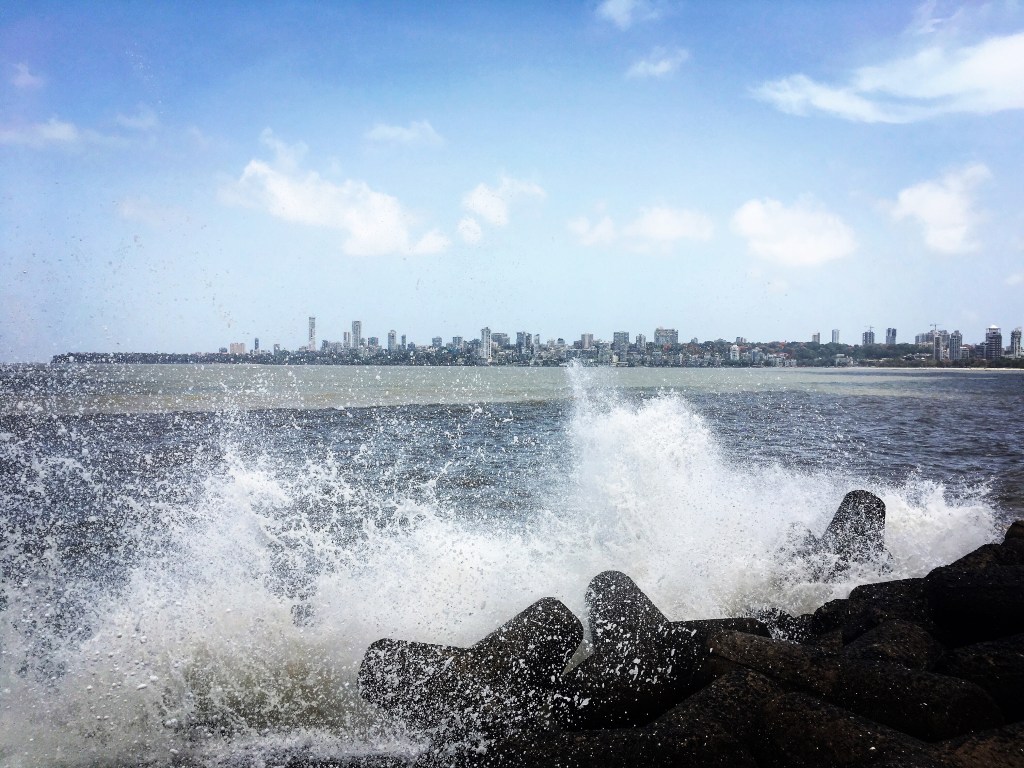
My last stop in India was Mumbai (formerly Bombay), India’s financial epicentre and Bollywood hub on the shores of the Arabian Sea where more than 20 million people call home. I will, however, refer to it as Bombay because locals refuse to adopt the city’s new name. I guess they missed the memo over two decades ago. Over two days I explored Bombay’s surroundings, including the famous Colaba neighbourhood (where I stayed at Abode, a beautiful boutique hotel) and Bandra, the so-called “Brooklyn of Bombay”, a hip locale that oozes coolness. However I also took it really easy because I was still reeling from my stomach issues. Actually, Bombay was a great place to lay low seeing as I staying in a nice hotel just up the street from the Gateway of India and the Taj Mahal Palace hotel, two of the city’s main draws.


Of course, India is far too big to absorb in one trip, let alone 10. You have to make of it what you choose. My time in this country introduced me to both the good and bad that comes with visiting India. It is a colourful, dynamic place where you can never get bored and the sights are rich with both colonial history and an even more compelling past before the British occupation. There are, however, a few downsides, including rampant pollution, throngs of people that have no concept of personal space, the constant staring (which turns into leering when Indian men see foreign women – super creepy), and the constant “winging it” nature of Indian society. Despite it all, India is a gem of a country and you have to experience it at least once in your lifetime. It is one of the cradles of human civilization – enough said. My word of advice: save your stomach and don’t eat too much chaat!
Up next: flying to Bali, Indonesia where I will spend time in both Ubud and Amed Beach before ferrying across to the Gili Islands, where I plan to be a beach bum for awhile, after which I will head to Lombok to hike the ridge of Mount Rinjani, an active volcano whose caldera is filled by a sea-blue crater lake. From there I plan to venture to a lesser visited Indonesian island for more adventure, but I have not decided on my destination (possibly Sulawesi, Flores or Sumatra).
Much love to friends and family.




















 Into the Breach